I spend a lot of time thinking about credibility, not only as the author of The Credibility Engine, but as someone who has spent more than two decades building teams, launching companies, selling technology, and helping businesses enter new markets. A large technology conference makes credibility visible in a way that very few other environments can. Hundreds of companies are competing for attention at the same time, and every booth, stage, sign, demonstration, and conversation is trying to answer the same basic question: Why should anyone stop and pay attention to us?
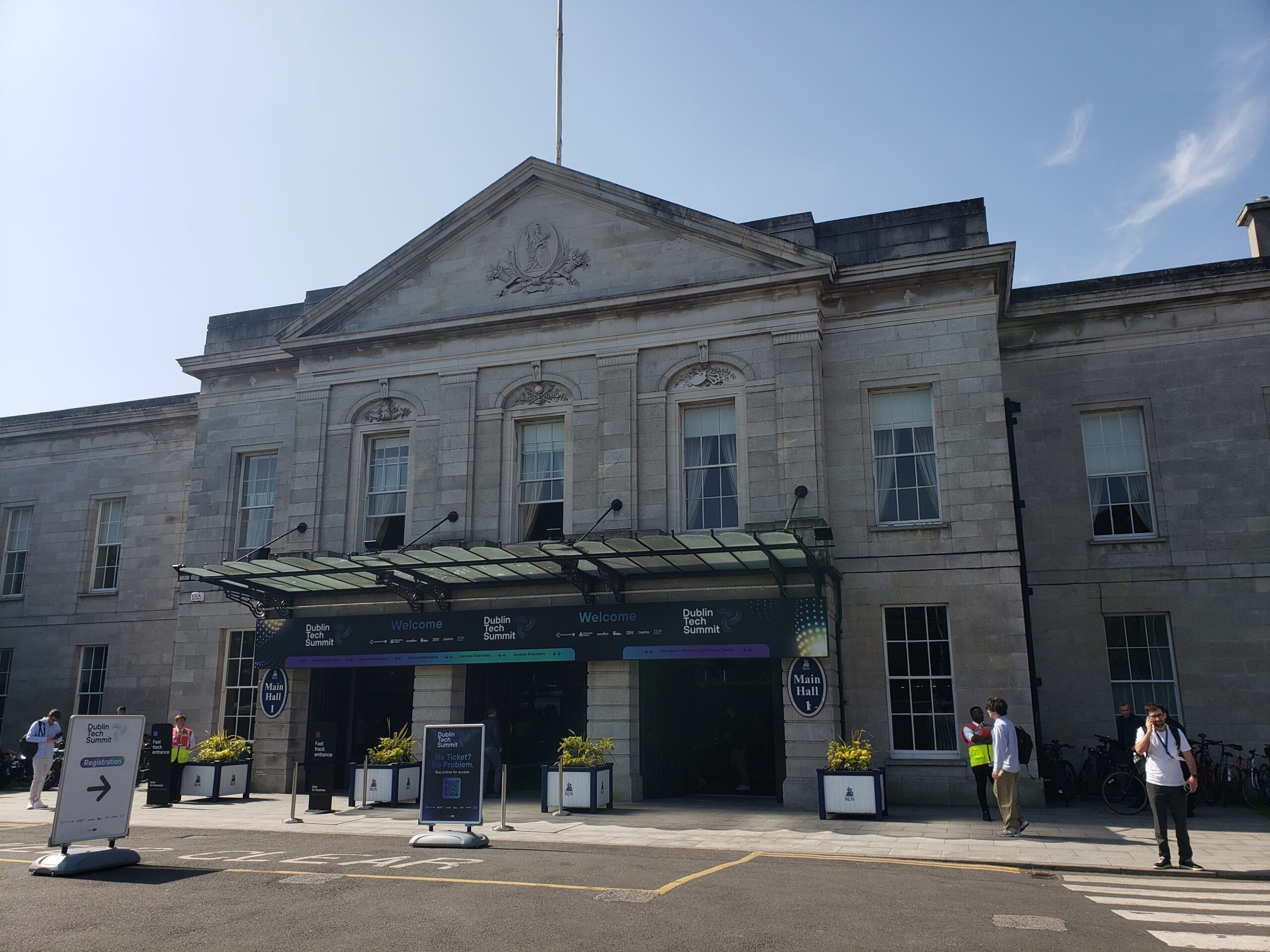
That is one of the reasons I shot this six-and-a-half-minute GoPro walkthrough of Dublin Tech Summit 2026. This is not a heavily produced event recap that only shows the largest stages, the biggest sponsors, and a few carefully selected crowd shots. It is a ground-level walk through the event that gives you a better feel for its scale, energy, exhibitors, and overall environment. If you are thinking about attending, speaking, exhibiting, or simply want to see what one of Europe’s most international technology gatherings actually looks like, this video should give you a pretty honest view.
Held May 27 and 28 at the RDS in Dublin, the summit advertised approximately 8,000 attendees, 200 international speakers, 160 exhibitors, and representation from 70 countries. Its program extended across stages focused on global leadership, emerging technology, workshops, startups and scaleups, deep technology, and international infrastructure. Those numbers tell part of the story, but walking the floor makes the size and variety of the event much more tangible. Technology stops feeling like one industry and starts looking like an enormous collection of companies, ideas, countries, founders, investors, and potential commercial relationships.
I was also in Ireland having broader conversations about European regulation, startup scaling, and what it takes for emerging companies to expand into the United States. That shaped the way I looked at the event. I was not only interested in which companies had the newest technology or the most impressive display. I was looking at which teams could clearly translate their innovation into a commercial proposition that a customer, partner, or investor could quickly understand.
That matters because attention is incredibly scarce at an event of this size. An exhibitor may only have a few seconds to help someone understand who they are, what problem they solve, and why a conversation would be worthwhile. A large booth can attract attention, but money and production value do not automatically create trust. The companies that stand out are often the ones that combine a clear message with relevant proof, knowledgeable people, and an experience that makes it easy for someone to take the next step.
This becomes even more important for startups and international companies. A team may have a strong product, meaningful traction in its home market, and a compelling technical story, but those strengths do not always travel on their own. Buyers in another country still need context. They need to understand whether the company knows their market, can support their expectations, has evidence that the product works, and will still be there after the initial excitement of the introduction is gone.
This is why I continue to argue that credibility is not only commercial infrastructure, it is also becoming one of the most important forms of commercial currency. At an event like Dublin Tech Summit, credibility influences which booth someone visits, which introduction gets accepted, which founder earns a second meeting, and which company people remember after they return home. Innovation may earn a company the right to enter the room, but credibility often determines what happens once it gets there.
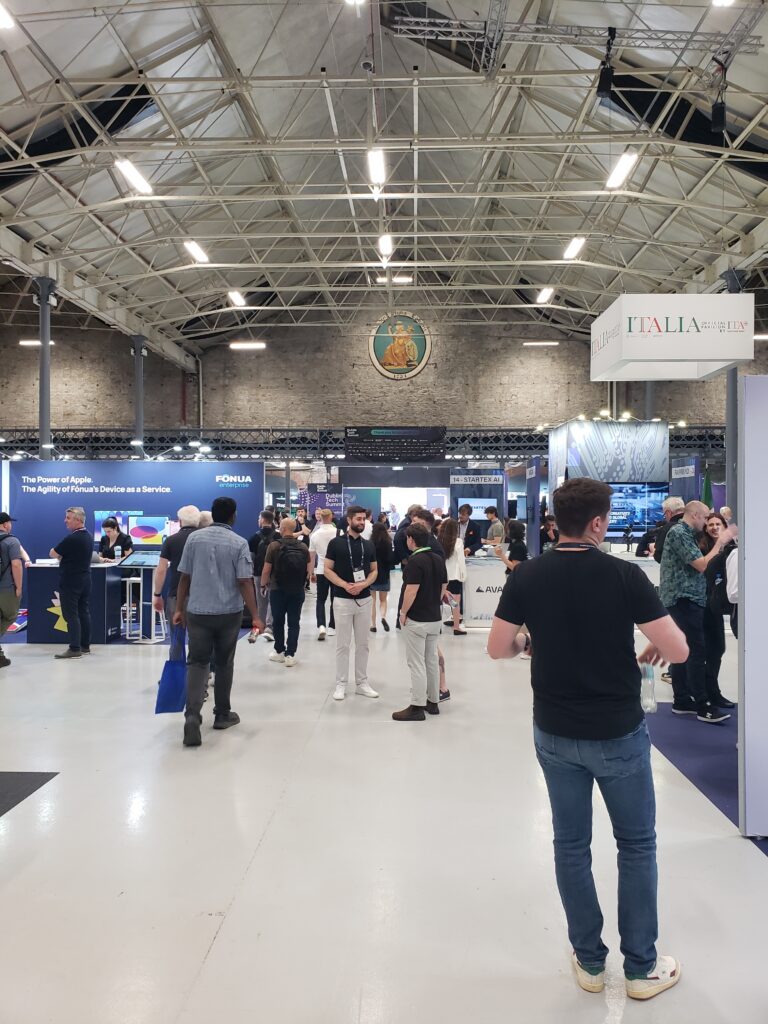
There is also real value in seeing an event beyond its published agenda. You can read a list of speakers and session descriptions online, but that does not show you the density of the floor, how companies present themselves, how national and regional technology ecosystems create shared platforms, or how early-stage startups appear alongside established global brands. A walkthrough gives you a different kind of information. It shows you the environment in which all of those companies must compete, communicate, and make an impression.
One of my larger takeaways from Dublin is that technology ecosystems are becoming increasingly global while commercialization remains surprisingly local. A company can be built in Dublin, Warsaw, Detroit, or almost anywhere else, and its technology can reach the world almost immediately.
Buyers, however, still make decisions through local expectations, trusted relationships, relevant case studies, and proof that feels familiar to them. That gap between global innovation and local credibility is one of the biggest challenges facing companies that want to scale across borders, but it is also one of the largest opportunities.
The walkthrough is only six and a half minutes, so it is not intended to replace being there. It is simply a chance to walk the floor with me, get a feel for Dublin Tech Summit 2026, and look at the event through the eyes of someone who spends a lot of time thinking about growth, commercialization, and credibility. As you watch, pay attention to what earns your attention and what gets lost in the crowd. That lesson applies well beyond a technology conference.
If you enjoy this kind of ground-level look at technology events, global markets, and the work required to turn innovation into commercial traction, subscribe to The Credibility Engine channel. I will be sharing more event walkthroughs, founder conversations, and practical observations from the places where technology, trust, and commercialization come together.